Lung cancer is a global health challenge. Could faster diagnosis change the picture?
Lung cancer was the world's most commonly diagnosed cancer and leading cause of cancer death in 2022. A planned centre in Leeds aims to shorten the time from referral to an initial answer, while global gaps in access to diagnosis and treatment remain stark.
3 Nov 2026 · 5 min read
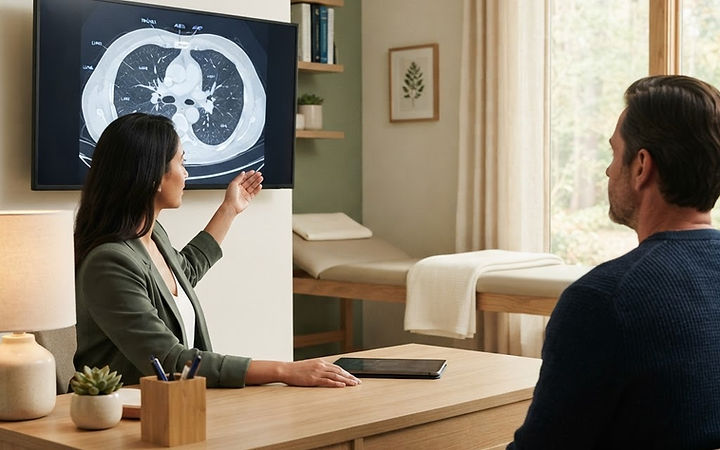
Lung cancer affects people in every region of the world, but the chance of getting timely diagnosis and treatment can vary greatly depending on where someone lives.
In 2022, an estimated 2.5 million people worldwide were diagnosed with lung cancer and 1.8 million died from it, making it the leading cause of cancer death globally. The World Health Organization says lung cancer is often diagnosed at an advanced stage, when treatment options may be more limited.
Symptoms to know
Symptoms can include a cough that does not go away, chest pain, shortness of breath, coughing up blood, fatigue, unexplained weight loss and repeated lung infections. These symptoms can also have many other causes, and early lung cancer may cause no obvious symptoms. There is no single global figure for how often people experience each symptom; worldwide data more commonly tracks diagnoses, deaths and access to care.
Not just smoking
Smoking remains a major risk factor, but it is not the only one. The WHO also identifies air pollution and occupational exposures among contributors to lung cancer risk. People who have never smoked can develop the disease too.
Access to treatment varies around the world
The burden of lung cancer is global, but access to the tools used to diagnose and treat it is not evenly shared. Radiotherapy is an important part of cancer care, yet a recent geospatial analysis estimated that only 17.1% of people in low-income countries live within 120 minutes of a radiotherapy facility, compared with 93.1% in high-income countries. These figures cover radiotherapy access across cancer care generally, rather than lung cancer alone.
A seven-day aim in Leeds
Against this backdrop, GenesisCare is planning a new private cancer centre in Leeds, expected to open in January 2027. The company says its Lung Cancer Rapid Response Pathway will bring specialist consultations, diagnostic investigations and treatment planning together, with the aim of establishing within seven days whether lung cancer is likely and what should happen next.
That seven-day timeframe is GenesisCare's stated aim for its planned service. It is not a global benchmark, and the service will be available to patients using private health insurance or paying for their own care.
In England, the NHS Faster Diagnosis Standard sets a 28-day maximum from an urgent referral for suspected cancer to being told whether cancer has been found or ruled out. GenesisCare says its pathway is designed to reduce waits between appointments, tests and specialist decisions.
The pathway is expected to use a digital system to track each patient's progress and flag when action is needed. GenesisCare describes this as "air traffic control" for a patient's diagnostic journey. The company also plans daily virtual multidisciplinary reviews, bringing together specialists in respiratory medicine, radiology, surgery and oncology to consider results as they become available.
Dr Kevin Franks, consultant clinical oncologist at GenesisCare, said that complex lung cancer investigations involve multiple tests, specialists and decisions, and that the proposed pathway is intended to bring these elements together.
"Our plan is to confirm whether a patient is likely to have lung cancer or not within seven days," he said.
From assessment to treatment and support
For patients diagnosed with lung cancer, the planned Leeds centre expects to offer treatment options based on individual diagnosis and clinical suitability. These may include stereotactic ablative radiotherapy (SABR), a highly focused form of radiotherapy, using MRI-guided or cone-beam CT-guided techniques. Patients who may be suitable for surgery will be referred to thoracic surgeons.
The centre also plans to provide support from a lung clinical nurse specialist, alongside wellbeing services that may include nutrition, exercise, smoking cessation and preparation for treatment.
Dr Jon Robson, consultant respiratory physician at GenesisCare, said the aim was for patients to experience a more connected process.
"It should feel like one continuous journey rather than a series of appointments and waiting periods," he said.
The bigger picture
A faster pathway cannot guarantee an earlier stage at diagnosis or a better outcome for every patient. But reducing avoidable delays is one part of a broader effort to improve lung cancer care. Worldwide, that effort also depends on prevention, public awareness, timely investigation and fair access to appropriate treatment.
When to seek advice
Anyone experiencing a persistent cough, unexplained breathlessness, chest pain, coughing up blood, unexplained weight loss or ongoing fatigue should seek medical advice. These symptoms do not necessarily mean cancer, but a healthcare professional can help assess what may be causing them.
About GenesisCare: GenesisCare UK provides private cancer care, including diagnostics, medical oncology, radiotherapy and theranostics. The company says its Leeds centre is expected to open in January 2027.
Reviewed by
General educational information only. It does not replace advice, diagnosis or treatment from a qualified healthcare professional.