Can salmon, walnuts, green tea and dark chocolate delay ageing by 12 years?
A social media post claims that salmon, walnuts, green tea and dark chocolate can delay human ageing by as much as 12 years. It is an appealing promise, but the evidence does not support that headline.
26 Oct 2026 · 4 min read

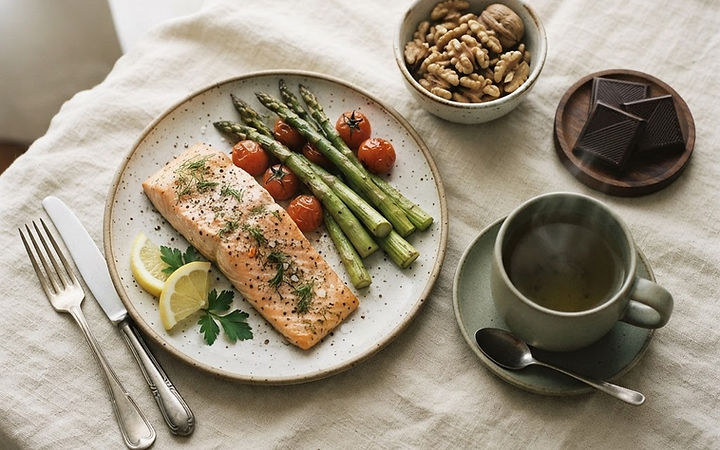
Some of these foods can be part of a balanced diet, and research is exploring how dietary patterns relate to health as we age. But there is no established evidence that eating this particular combination will turn back the body’s biological clock by 12 years.
Where might the “12 years” figure come from?
A recent study in npj Science of Food analysed dietary and health data from 191,689 UK Biobank participants. Researchers developed a score called the Machine-learning YouTHful, or MYTH, diet and compared it with the risk of “ageing-related” death. The participants were followed for a median of 12.2 years.
That 12.2 years describes the study’s follow-up period. It does not mean participants’ ageing was delayed by 12 years. The research did find that people with higher MYTH diet scores had a lower risk of ageing-related mortality than those with the lowest scores. It also found associations with slower ageing in some organs. These are meaningful findings, but they do not show that a particular menu adds years to a person’s life or reverses ageing.
The study was observational: it compared people’s reported diets with later health outcomes rather than assigning them a diet in a controlled trial. That means it can identify associations, but cannot establish that diet alone caused the differences.
The four foods were not the study’s “anti-ageing” formula
The MYTH score was built from a wider dietary pattern. Its ten categories included nuts, poultry, legumes, refined grains, processed meat, red meat, butter, sweetened drinks, coffee and a combined beer-or-wine category. Salmon, green tea and dark chocolate were not among the final scored components.
This matters because social media posts can combine familiar “healthy” foods with a striking number and make them sound like a proven prescription. The paper did not test a salmon, walnut, green tea and dark chocolate plan, and it did not conclude that those foods delay ageing by 12 years.
The researchers also note limitations: diet was assessed mainly through 24-hour recalls, which may not represent someone’s usual long-term eating habits, and the cohorts were predominantly from Western or White European backgrounds. Further work is needed to test how well the findings apply across different populations and diets.
What can these foods contribute?
Salmon is an oily fish and a source of long-chain omega-3 fats. Walnuts provide unsaturated fats and fibre. Green tea contains polyphenols, while cocoa contains plant compounds called flavanols. These foods can contribute useful nutrients, but a food’s presence in a healthy diet does not make it an anti-ageing treatment.
Dark chocolate also varies in its cocoa and sugar content, and it can be high in energy. It is best thought of as an occasional food to enjoy, rather than something to eat for a promised longevity effect. Green tea is a reasonable drink choice for many people, but it is not a substitute for medical care or a balanced diet.
The bigger picture: eating patterns, not magic ingredients
For healthy ageing, the overall pattern of eating is more useful than focusing on a short list of “superfoods”. The NHS Eatwell Guide recommends a varied diet that includes fruit and vegetables, higher-fibre starchy foods, protein sources such as beans, pulses, fish and eggs, and small amounts of unsaturated oils. It advises aiming for at least two portions of fish a week, including one portion of oily fish, and having foods high in fat, salt or sugar less often and in smaller amounts.
These recommendations support general health; they are not a promise to slow biological ageing by a set number of years. Ageing is shaped by many factors, including genetics, health conditions, smoking, physical activity, sleep, environment and access to healthcare. No single food can guarantee a particular outcome.
What should readers take away?
Salmon, walnuts and unsweetened tea can all fit into a varied, balanced diet, and a small amount of dark chocolate can be enjoyed if it suits you. But the claim that these four foods delay human ageing by up to 12 years is not supported by the study identified here. Its 12-year figure refers to how long participants were followed, while its results describe associations between an overall dietary score and health outcomes.
The practical message is less dramatic, but more reliable: focus on a sustainable, balanced eating pattern rather than chasing a single “anti-ageing” food list. If you have a medical condition, take medication, or need tailored nutrition advice, speak with a GP or registered dietitian.
Sources
- Miao Y, Li Z, Zhang X, Liu Z, Ma Y. A machine learning-derived dietary pattern for aging. npj Science of Food. 2026.
- NHS. Eating a balanced diet.
- NHS. Fish and shellfish.
Editorial note: This article explains population-level research and is not individual medical or nutrition advice.
Reviewed by
General educational information only. It does not replace advice, diagnosis or treatment from a qualified healthcare professional.